ERSE has gathered input to inform the preparation of the new regulatory period for the gas sector from 2028 to 2031
12/05/2026
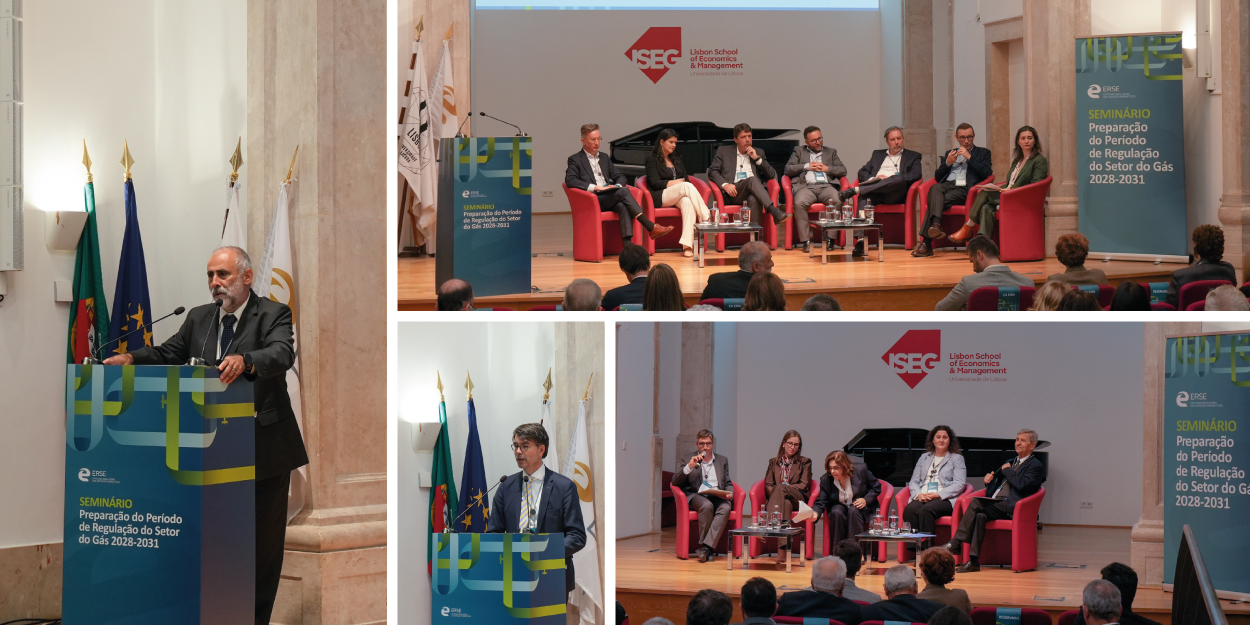
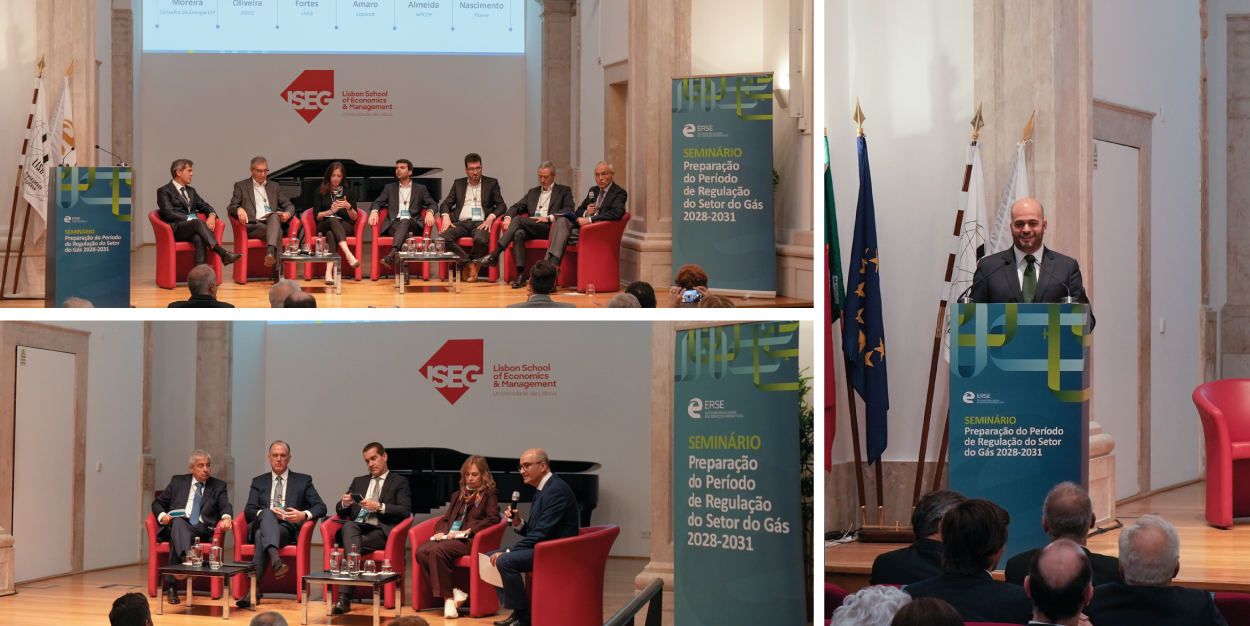
On 7 May 2026, ERSE – the Energy Services Regulatory Authority – held a seminar at the CGD Auditorium of ISEG (Higher Institute of Economics and Management) in Lisbon, aimed at gathering input for the new Gas Sector Regulatory Period, which will run from 2028 to 2031.
The in-person event brought together 23 speakers representing the sector’s various stakeholders – consumers, suppliers and infrastructure operators: networks, storage and liquefied natural gas terminals – and an audience of around 120 people. The initiative also featured a panel dedicated to emerging issues and challenges, moderated by the former president of ERSE, Professor Vitor Santos, where the role of biomethane in the sector’s decarbonisation efforts within the ongoing energy transition was discussed.
In the opening session, the Chairman of ERSE’s Board of Directors, Pedro Verdelho, highlighted the seminar’s main objective as reflecting “on the difficulties we face in the gas sector and the possible solutions and remedies we should adopt”.
Pedro Verdelho also highlighted that this new regulatory period faces several challenges, including: “the decline in gas demand, which has not recovered since 2021; the competitiveness of natural gas prices compared to electricity for energy-intensive industry; and the role that biomethane could play in the decarbonisation process, in sectors where electrification is more difficult and expensive; the planned end of transitional tariffs by the end of 2027, in line with the expiry of take-or-pay contracts”.
“These are very challenging issues that will guide the definition of the rules and methodologies to be adopted in the new gas regulatory period, following a public consultation process, and which we want to be more resilient and incorporate the views of all stakeholders, so that we can protect consumers and ensure cost-efficiency for the sector,” he concluded.
For his part, the Secretary of State for Energy, Jean Barroca, who closed the seminar, highlighted the decisive role of regulation in preparing for the next regulatory period. “ERSE plays a decisive role in assessing investments, protecting consumers, analysing tariff impacts and monitoring implementation,” he emphasised.
“The next regulatory period will take place in a context where the country must reconcile four objectives that cannot be viewed in isolation: security of supply, the need for affordable prices for households and competitive prices for businesses, and the progressive decarbonisation of the economy,” he stated.
“The gas sector has a future if it is, and will be, approached with sound judgement. That future depends on having secure networks, prudent investment, the progressive integration of renewable gases, a stronger link to industry, and planned coordination with the electricity sector. It also depends on recognising that every euro invested in a regulated network will be paid for by consumers over several years. Hence the importance of making decisions in good time and with the right information. Preparations for the 2028–2031 regulatory period must enable this sector to continue contributing to the country’s energy security, the competitiveness of the economy and decarbonisation, but with transparency, stability and cost control,” he emphasised.
Access the presentations:
Keynote Speech
Dennis Hesseling - International Energy Agency (IEA)
Panel I - Retailers' Perspective
Gonçalo Santos - EDP Comercial
Panel II - The Consumer's Perspective
Panel III - Perspective of Infrastructure Operators: Networks, Storage, and LNG Terminals
Pedro Furtado - REN Gasodutos/REN Atlântico/REN Armazenagem
Nuno Fitas Mendes - REN Portgás
Panel IV - Emerging issues and challenges