ConvERSE debates technological neutrality and removal of barriers to investment in biofuels
06/03/2026
On 3 March 2026, ERSE – the Energy Services Regulatory Authority – hosted a ConvERSE event to discuss the role of biofuels in the context of the energy transition, bringing together the views of national and international experts from industry and academia.
The event, held both in person and online, attracted a total audience of around 200 participants. The opening session was led by ERSE’s President, Pedro Verdelho, while the closing session was delivered by ERSE Board Member Ricardo Loureiro.
The session included a presentation by Henrique Matos, from the Instituto Superior Técnico (IST), of the book Biofuels: from production processes to the market, jointly authored by IST and ERSE. The book can be consulted here.
Fabrício Cardoso, from Argus Media, spoke about the dynamics and trends in international biofuel markets, while Maria Auxiliadora Nobre, from the National Petroleum Agency (ANP), addressed pioneering public policy instruments to promote biofuels in Brazil.
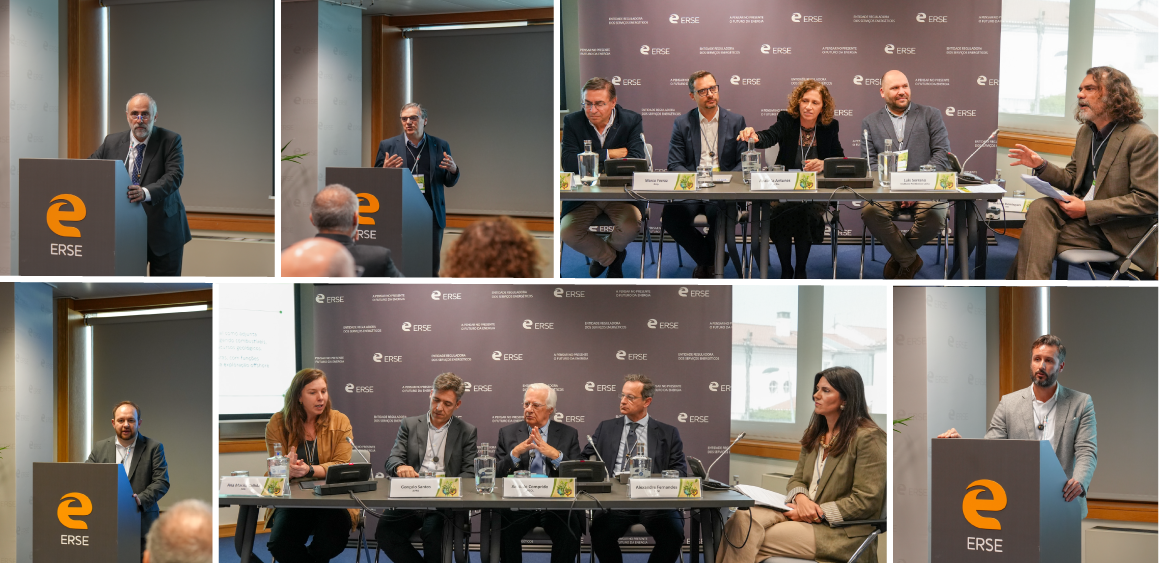
In the first round table, dedicated to innovation, participants from academia and industry discussed the sector’s development prospects, highlighting the technological advances achieved over the last two decades and the contribution that low-carbon fuels – both biofuels and synthetic fuels – can make to the decarbonisation of the transport sector, particularly aviation. However, it was noted that this is a sector in which innovation requires substantial investment and, therefore, regulatory stability and predictability. It was also argued that decarbonisation, within the framework of public policy, should be pursued through the complementary use of different energy vectors, adopting technological neutrality as a principle, and that choices should be made by the market on the basis of cost efficiency.
The second round table addressed the challenges associated with the functioning of the biofuel market in Portugal, drawing on perspectives from associations representing the sector, as well as from entities involved in the development of this energy vector. Industry representatives on this panel identified the need for policies and strategic direction as key elements for the sector's growth, citing, as an example, the importance of transposing the European RED III Directive (Renewable Energy Directive III), which sets targets for reducing greenhouse gas emissions by 2030. In this regard, industry associations argued that the national industry is prepared and able to respond swiftly, provided there is clarification regarding the 2030 and post-2030 targets.
It was also stressed that there should be consistency across the various European policies and that, at national level, there should be a plan for low-carbon fuels, alongside efforts to take advantage of Portugal's installed capacity to produce biofuels from domestic resources, optimising value chains to use all the raw materials available in the country.
Access the video of the event
Access the available presentations:
- "Apresentação do livro Biocombustíveis: dos processos de produção ao mercado", Henrique Matos, IST
- "Dinâmica e tendências nos mercados internacionais de biocombustíveis", Fabricio Cardoso, Argus Media
- "Política Nacional de Biocombustíveis (RenovaBio)", Maria Auxiliadora Nobre, ANP