ERSE reinforces its commitment to innovation and sustainability through the United Nations Blue Decarbonisation Task Force
26/10/2026
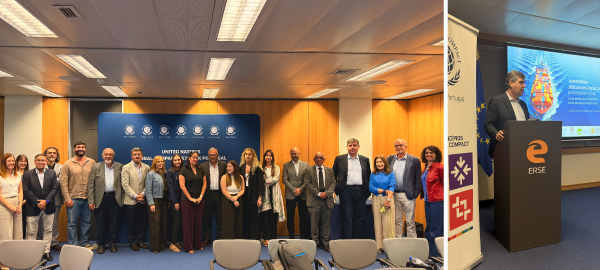
On 15 October 2026, ERSE hosted the event: “Blue Decarbonisation – From Challenges to Action”, dedicated to the launch of the second phase of the Blue Decarbonisation Task Force (TFDA), an initiative of the United Nations Global Compact Network. The session brought together representatives from public bodies, companies and other stakeholders from the energy, maritime and port sectors, with around 40 participants attending in person and 12 taking part online.
The initiative marked the launch of the TFDA’s second phase of work, which is focused on delivering concrete results. It aims to foster dialogue between the public and private organisations and coordination between energy, maritime transport, infrastructure and finance sectors, with a view to implementing solutions and avoiding barriers to investment in decarbonisation.
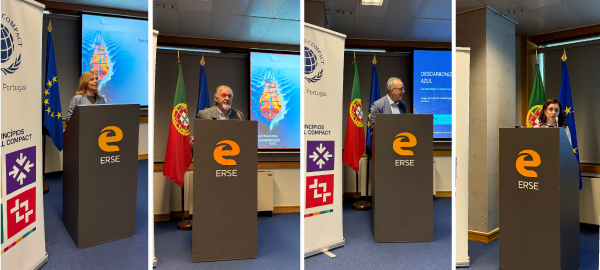
The event reflects part of ERSE’s work to monitor and promote innovation, the energy transition and sustainability. In his opening remarks,, Artur Trindade, representing ERSE, emphasised the importance of the initiative, particularly in the context of ERSE’s cooperation with Portuguese-speaking countries.
The session included presentations by Mário Parra da Silva, Chair of the UN Global Compact Network Portugal, on the framework of the initiative; by Marisa Lameiras da Silva, Director-General of the Directorate-General for Maritime Policy, on the strategic vision for the transition; and from André Couto, of the Directorate-General for Natural Resources, Safety and Maritime Services (DGRM), on the challenges of implementing decarbonisation policies in the maritime sector. Anabela Vaz Ribeiro, Executive Director of the UN Global Compact Network Portugal, presented the second phase of the Task Force and its objectives.
The TFDA provides a collaborative platform that brings together companies, public bodies, experts and knowledge partners to accelerate the decarbonisation of the maritime and port sectors. Following an initial phase dedicated to identifying priorities and drafting strategic documents and recommendations, the second phase aims to move towards the implementation of solutions, the removal of barriers to investment and the strengthening of cooperation between the various stakeholders. The work is organised around four key areas: the digitalisation of ports, maritime operations and industry; infrastructure and energy; the decarbonisation of fisheries and maritime-coastal activities; and financing mechanisms and transition plans.