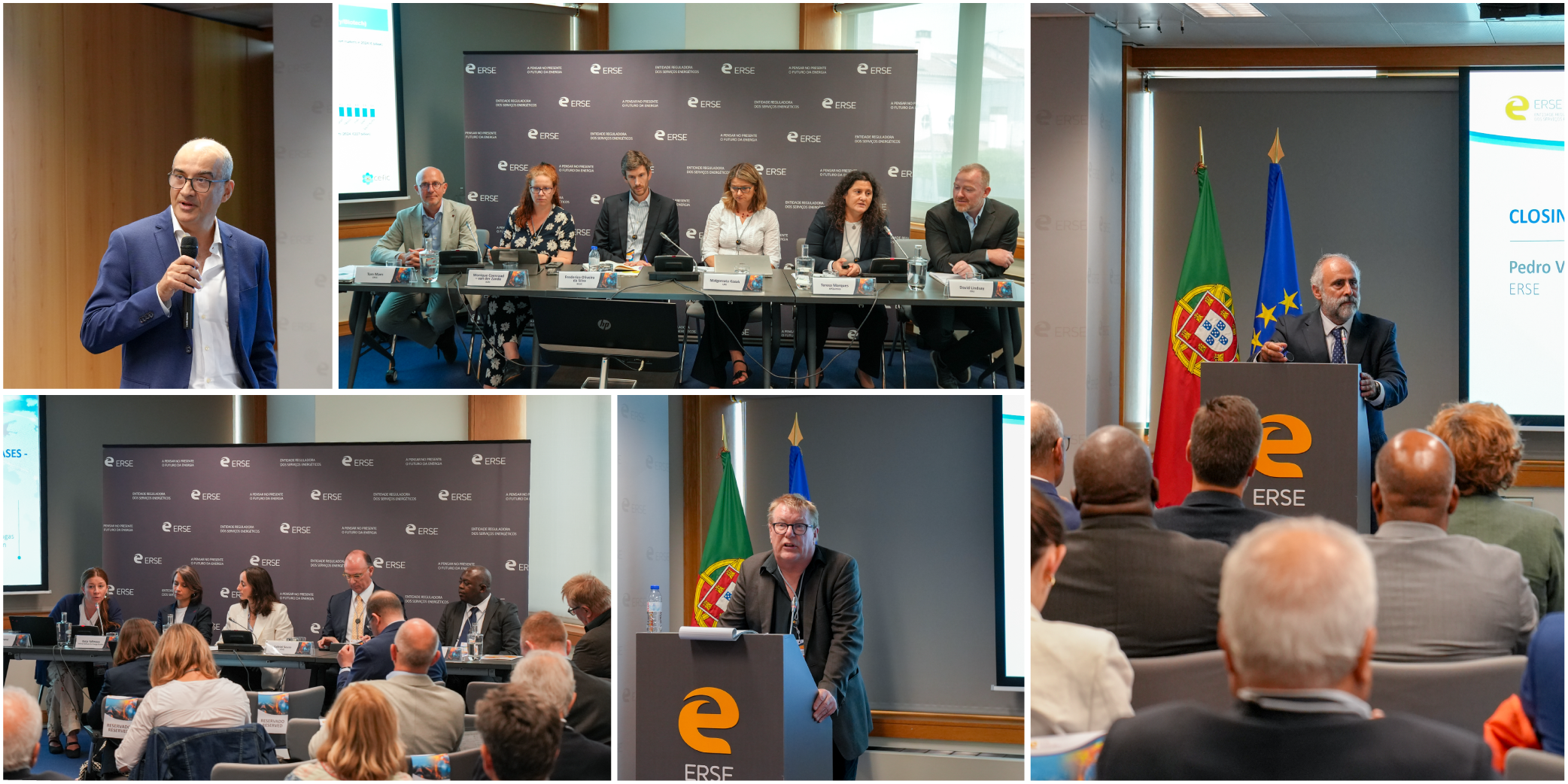
ERSE organised a seminar on the role of regulation in the natural gas sector in the context of the energy transition
03/07/2026
ERSE – the Energy Services Regulatory Authority held a seminar on 24 and 25 June 2026 in Lisbon on the role of economic regulation in the natural gas sector within the context of the energy transition.
This high-level meeting aimed to analyse the regulatory, economic and technological challenges associated with decarbonisation, as well as the role of gas infrastructure in a transforming energy system.
The initiative featured a keynote address by the Secretary of State for Energy, Jean Barroca, as well as presentations by the Chairman of ERSE, Pedro Verdelho, and the director, Ricardo Loureiro, alongside national and international regulators, network operators, experts and academics.
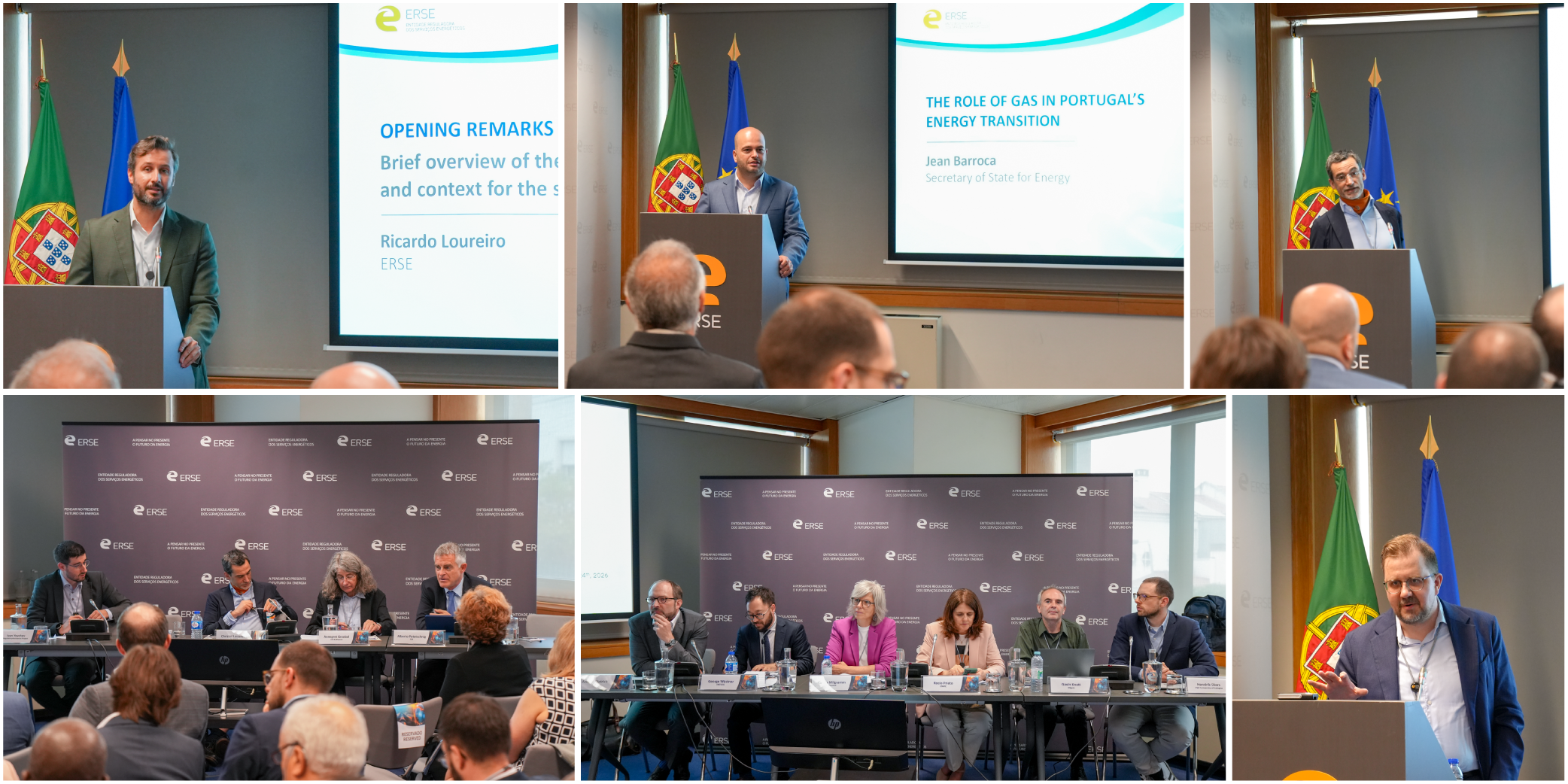
The first session, dedicated to the limits of regulatory action, sought to define the role of regulation in the energy transition process. Among the main topics under discussion were the protection of gas consumers who remain in the sector, the allocation of potentially sunk costs of gas infrastructure amongst the various stakeholders, and the lessons that can be learnt from other sectors, such as telecommunications, regarding the management of the gradual decommissioning of networks or the change in their functions.
In the second session, participants discussed allowed revenue models for natural gas infrastructure, against a backdrop of uncertainty regarding the evolution of demand. The debate centred on the need to review the remuneration models for high-, medium- and low-pressure networks, the possibility of adjusting depreciation policies to address the unforeseen obsolescence of assets, and the creation of incentives to promote the downsizing or decommissioning of parts of the natural gas network that are no longer required.
Changing consumption patterns were the focus of the third session, which also analysed the outlook for gas demand up to 2030. The experts sought to address issues relating to the electrification of buildings and domestic consumers, the future of industrial gas consumption and the uncertainties affecting demand trends, as well as the most appropriate mechanisms for sharing infrastructure costs between producers and consumers.
In particular, industrial consumers – notably the chemical industry, which will continue to require gas for its production activities – raised concerns regarding trends in natural gas prices, which are crucial to the competitiveness of European industry vis-à-vis the rest of the world, and the quality of the gas itself, which is essential for the production process.
Another key topic centred on defining tariff models capable of ensuring a balanced allocation of network costs over time. Various options for recovering infrastructure costs were assessed, including network access tariffs, connection charges and location-based price signals, with a view to ensuring a financially sustainable system during the energy transition.
The fourth and final session discussed the role of renewable and low-carbon gases as alternatives for utilising existing gas infrastructure. This includes green H2 , and biomethane, which not only can utilise existing networks but also have the potential to replace natural gas in certain industrial sectors.
It was a highly relevant seminar at which the challenges facing the gas sector were discussed with transparency, clarity and sound reasoning. The various contributions and insights presented will be very useful to ERSE as it prepares its proposal for the regulatory review of the gas sector, which is to be put out for public consultation as part of the preparations for the new regulatory period beginning in 2028.